

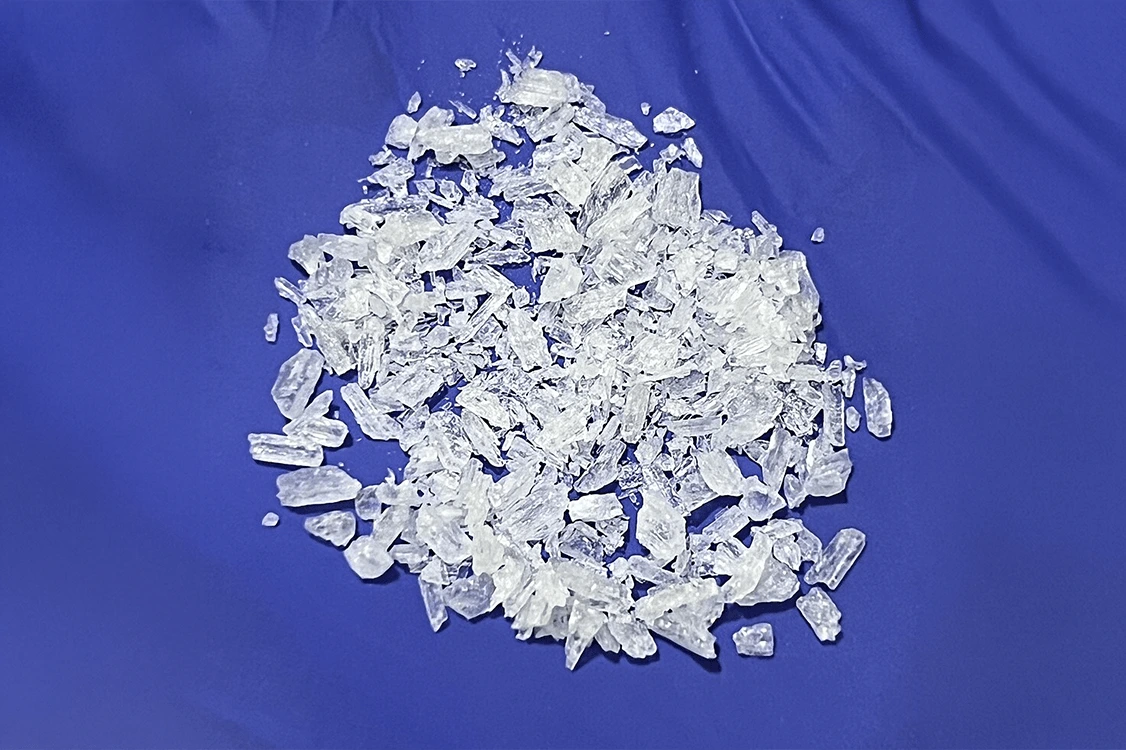
Methamphetamine can appear in several forms, including clear or whitish crystals, white or off-white powder, and tablets. If you’re wondering what meth looks like, it’s important to know that its appearance can vary and cannot reliably confirm what an unknown substance contains.
Understanding its appearance can provide useful context, but it’s important not to rely on looks alone. An unfamiliar substance cannot be reliably identified just by its color, shape, or texture, and trying to test it yourself can be unsafe. For someone concerned about possible meth use, recognizing changes in behavior, physical health, and daily life can be just as important.
In this guide, we’ll look at the common forms of methamphetamine, what crystal meth typically looks like, why its appearance can vary, and the signs that may indicate someone is struggling with meth use.
Common Forms of Methamphetamine
Appearance alone cannot confirm that an unknown substance is methamphetamine. Different substances can look similar, so visual identification is not reliable.
| Form | How it may appear |
|---|---|
| Crystal meth | Clear, translucent, white, or bluish-white crystals or irregular shards |
| Powdered meth | White or off-white powder |
| Methamphetamine pills | Tablets that can vary in size, shape, and appearance |
What Is Meth?
Meth, short for methamphetamine, is a powerful stimulant that affects the central nervous system. It increases activity in the brain and can cause increased alertness, energy, and physical activity. While methamphetamine has limited medical uses, illicit methamphetamine carries serious risks, including addiction and other health problems.
Methamphetamine use is also a significant concern in the United States. According to the 2024 National Survey on Drug Use and Health (NSDUH) from the Substance Abuse and Mental Health Services Administration (SAMHSA), an estimated 2.4 million people age 12 and older used methamphetamine, representing about 0.8% of the U.S. population in this age group.
The term “meth” generally refers to methamphetamine, while “crystal meth” usually refers to its crystalline form. Because methamphetamine can occur in different forms, its appearance can vary as well.
The health impact can extend beyond substance use itself. In 2024, the CDC recorded 28,722 overdose deaths involving psychostimulants with abuse potential, a category that includes methamphetamine and other stimulants. The age-adjusted death rate for this category was 8.5 deaths per 100,000 people.
For people who use meth regularly, the drug can become difficult to stop using even when it begins affecting their health, relationships, work, or daily life. Understanding what meth is and recognizing the signs of problematic use can be an important first step toward getting help.
What Does Methamphetamine Look Like?
Methamphetamine does not have one standard appearance. The drug can be found in several forms, and the way it looks can depend on whether it is in a crystalline, powdered, or tablet form. This is why one person may describe meth as looking like glass or ice, while another may describe it as a powder or pill.
Methamphetamine does not have one consistent color, shape, or texture. Its appearance can vary by form, and an unknown substance may contain other substances that change how it looks.
Crystal methamphetamine is the form most commonly associated with the name “crystal meth.” It may appear as clear or translucent crystals, white or bluish-white pieces, or irregular shards that can resemble broken glass. Larger pieces may have a rock-like appearance.
Powdered methamphetamine can look quite different. It may appear as a white or off-white powder and may not have any of the obvious crystalline features associated with crystal meth. Because many substances can have a similar powdery appearance, color and texture alone cannot establish what a substance contains.
Methamphetamine pills are another form. Their appearance can vary depending on the particular product, so the presence of a tablet does not by itself confirm that it contains methamphetamine.
The appearance of a particular quantity, such as a gram or two grams, can also vary depending on the form and composition of the substance. For this reason, the size or amount of an unknown substance cannot reliably establish what it is.
These different forms are important to understand because meth is not always going to match the stereotypical image of clear crystals or glass-like shards.
What Does Meth Taste Like? Can You Identify It by Taste or Smell?
People may wonder what meth tastes like or whether crystal meth has a distinctive taste, but taste and smell are not reliable or safe ways to identify methamphetamine. What someone perceives as a particular odor or taste can be affected by other substances, contaminants, or chemicals present in an illicit drug.
More importantly, tasting an unknown substance can expose you to a potentially harmful drug or other toxic ingredients. Smelling it closely can also result in unnecessary exposure. There is no safe way to confirm that an unknown substance is methamphetamine simply by using your senses.
If you find a substance that you believe may be meth, avoid tasting, smelling, or otherwise experimenting with it. Do not handle it unnecessarily, and keep children and pets away from the area. If someone may have been exposed to an unknown substance and develops concerning symptoms, seek immediate medical assistance.
Can You Tell if Something Is Meth by Looking at It?
No. You cannot reliably confirm that an unknown substance is methamphetamine based only on its color, shape, texture, or appearance. Different substances can look similar. If you find something you believe may be meth, avoid tasting, smelling, or testing it yourself.
What Are the Signs of Meth Use?
Recognizing meth use is not always straightforward. A person may not show every sign, and many of the changes associated with methamphetamine can also occur with other health or substance use problems. However, noticeable changes in physical health, behavior, mood, or daily routines may be worth paying attention to when they occur alongside other concerns.
If you’re concerned about broader signs of drug use, learn how to recognize possible drug use in someone you care about.
Some possible signs of methamphetamine use include:
- Changes in sleep: A person may stay awake for unusually long periods or develop an irregular sleep pattern.
- Changes in appetite: Meth can reduce appetite, which may contribute to noticeable changes in eating habits or weight.
- Increased activity or energy: Someone may appear unusually restless, energetic, or unable to sit still.
- Agitation or irritability: Meth use can be associated with significant changes in mood and behavior.
- Rapid or excessive talking: A person may talk much more quickly or frequently than usual.
- Suspiciousness or paranoia: Some people may become unusually distrustful, fearful, or convinced that others are against them.
- Changes in relationships or responsibilities: Ongoing meth use can begin affecting work, school, family relationships, finances, or other responsibilities.
- Changes in appearance or self-care: Skin changes can also occur, including sores associated with repeated scratching or picking. Learn more about meth sores and how they can develop.
No single sign confirms that someone is using meth. What matters is the overall pattern and whether these changes are becoming persistent or are affecting the person’s wellbeing and daily life. If you are concerned about someone, approaching the situation with compassion rather than judgment can make it easier to encourage them to seek professional support.
What Should You Do If You Find Something That May Be Meth?
Finding an unfamiliar substance can be unsettling, particularly if you are concerned that it may be methamphetamine. The safest approach is to avoid trying to identify or test it yourself. Its appearance, smell, or taste cannot reliably tell you what it contains, and direct contact may expose you to a harmful substance.
If you come across something you believe may be meth:
- Avoid touching it unnecessarily.
- Do not taste, smell, burn, or otherwise test it.
- Keep children and pets away from the substance.
- Do not attempt to dispose of an unknown substance without appropriate guidance.
- If someone may have swallowed, inhaled, or otherwise been exposed to an unknown substance and is experiencing concerning symptoms, seek immediate medical assistance.
If your concern is not the substance itself but a loved one’s possible meth use, focus on the changes you have noticed in their health, behavior, relationships, or daily life. A conversation with a healthcare or addiction professional can help you understand what support may be appropriate.
When Should Someone Get Help for Meth Use?
Methamphetamine use can become a serious problem when a person continues using the drug despite the effects it has on their health, relationships, work, school, or other responsibilities. For some people, attempts to stop may be followed by repeated use, cravings, or difficulty managing daily life without the drug.
Some signs that it may be time to seek professional help include:
- Using meth more often or in larger amounts than intended
- Feeling unable to stop or cut back
- Experiencing strong cravings for meth
- Continuing to use despite physical or mental health problems
- Missing work, school, or important responsibilities because of drug use
- Experiencing ongoing problems with family or relationships
- Spending significant time obtaining, using, or recovering from meth
- Trying to stop but returning to use
Methamphetamine addiction is a treatable substance use disorder, and seeking help does not have to wait until every area of a person’s life has been affected. Professional addiction treatment can provide assessment, ongoing support, and a structured approach to recovery. Depending on a person’s needs, treatment may include partial hospitalization programs (PHP), outpatient care, and sober living support that provide different levels of structure throughout recovery.
At Anchored Recovery Community, treatment is built around helping people address substance use while developing the skills, stability, and support they need for long-term recovery. If you or someone you care about is struggling with meth use, reaching out to our team can be an important first step toward finding the right level of care.